
Everything to Know About Battery Box & Power Packs
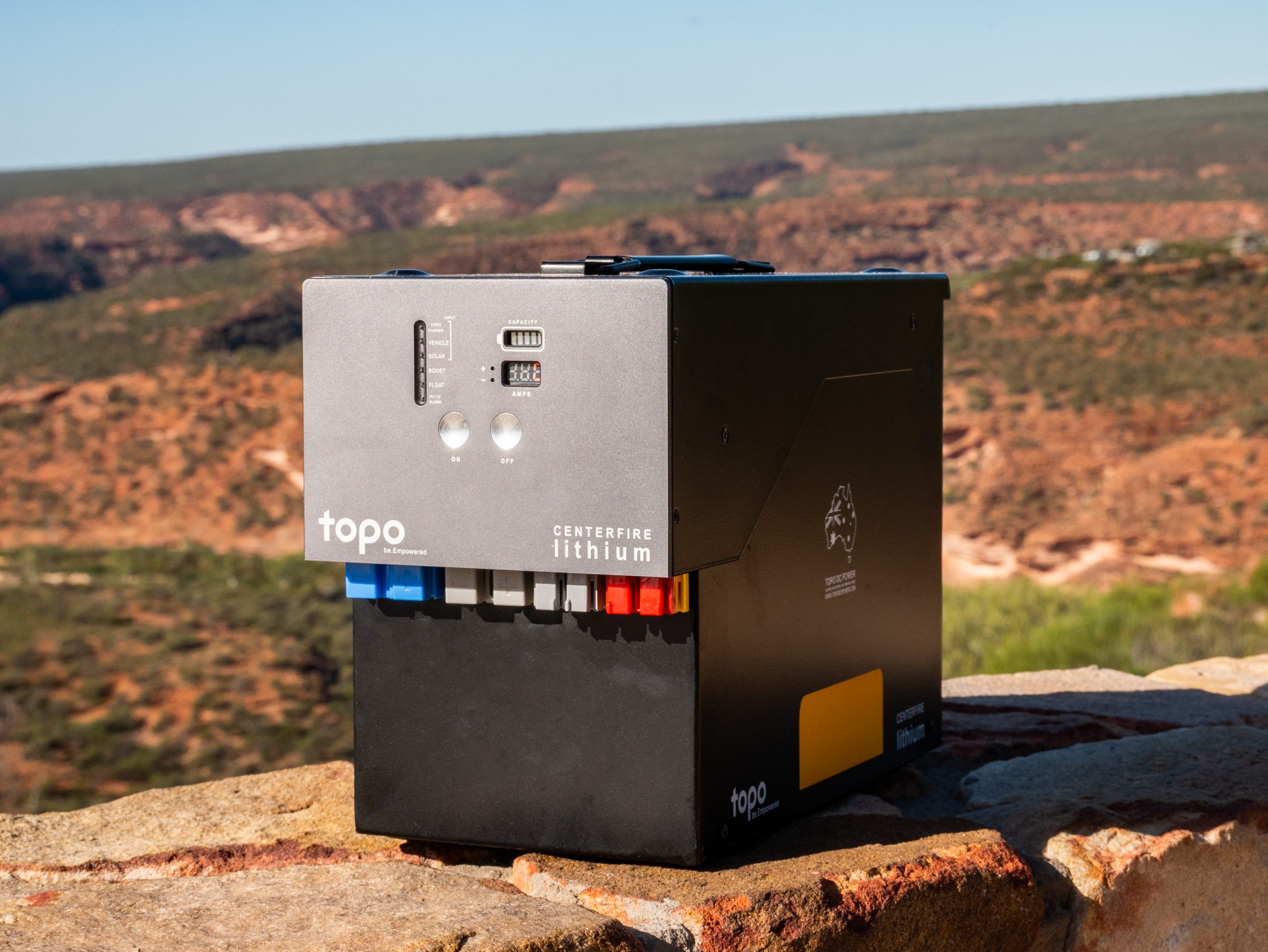
When you’re out on the road or deep in the Aussie bush. The last thing you want is a dead fridge, flat phone, or a vehicle that won’t start.
A solid battery box can be your solution to all these problems. It can keep your adventures powered, your essentials working and your mind at ease.
At Topo DC Power, we understand the importance of energy supply. Especially for 4WDers, campers, caravanners, and remote workers. We’ve spent over 40 years designing dual battery systems to keep your 12V appliances humming.
So, if you want to learn everything about battery boxes, you’re in the right place.
Buckle up, and let us start.
What Is a Battery Box?
A battery box is a portable & protective casing for a deep-cycle battery. It holds an additional battery during long trips. And keeps you powered wherever you go with its advanced components like:
- Built-in battery chargers
- Safety mechanisms
- Monitoring systems
This additional power source act as a dual battery unit. That takes the power load of all electrical devices from your vehicle battery. So, you can have a smart power hub for all your needs. From charging devices to powering lights.
Why Do You Need a Battery Box?
You might be wondering, why not just use a loose battery or any plastic box? Well, let us tell you why with a detailed list of perks that comes with a battery box.
| Feature | Description |
| Protection | A battery box prevents physical damage, keeps terminals safe and shields the battery from environmental hazards. |
| Convenience | It provides multiple outlets for different devices, so you don’t have to mess with direct wiring. |
| Safety | Built-in battery monitors prevent overcharging, over-discharging, and reduce the risk of battery failure or fires. |
| Movability | Instead of being stuck in one vehicle, a portable battery and power pack let you move your power source wherever you need it. |
If you’re into camping, overlanding, caravanning, or working in remote locations. A battery box can stay with you as a reliable power source.
What Are the Main Components of a Battery Box?
A battery box is a complete power management system. Packed with essential components that allow safe charging, discharging, and protection.
Understanding these components helps you choose the right battery box for your setup.
1. Battery Housing or Enclosure
The outer shell of a battery box is built to withstand rough handling, dust, and water exposure.
Depending on the model, common battery housings are:
- Heavy-duty plastic casings: Lightweight and resistant to corrosion.
- Steel enclosures: More durable and impact-resistant but heavier.
Safety of your battery completely depends on enclosure. So, choose it wisely.
2. Battery Tray & Straps
Inside the battery box, there’s a dedicated space to hold the battery securely.
You will find:
- Adjustable straps
- Mounting brackets
They prevent movement, especially when driving on a bumpy terrain. Reducing the damage and repetitive need for battery maintenance.
3. Input and Output Ports
A well-designed battery box has multiple ports for charging and powering different devices. These ports include:
- 12V Cigarette Sockets: Used for running fridges, lights, and other camping gear.
- USB Ports: Charge phones, tablets, and cameras on the way.
- Anderson Plugs: Used for high-current connections like solar panels and vehicle charging.
- 240V Inverter (Optional): Converts 12V power to standard 240V, allowing you to run household appliances.
All these ports enhance the functionality of battery. You can add the ones you need.
4. Built-in Battery Charger
A battery box includes a DC-DC charger or a mains-powered charger. It keeps your battery topped up and don’t let it die. You can charge your battery anywhere along the journey where electricity is available.
Some models also have a solar regulator. That allows direct solar charging with no need for additional equipment or electricity source.
5. Battery Monitor & Display
Keeping track of your power usage is important in long journeys. So, you can know how much power you have spent and how much is left.
Advanced battery boxes feature built-in monitors with LED displays. Showing the essential variables like:
- Battery voltage
- Charge status
- Power consumption
Some models even have Bluetooth connectivity for remote monitoring via a smartphone app.
6. Circuit Breakers & Fuses
For safety, a battery box includes:
- Fuses: Prevent damage from excessive current draw.
- Circuit breakers: Automatically cut power if there’s an overload or short circuit.
They keep you safe on abandoned roads from any sort of power mishap.
7. Cooling & Ventilation
Some high-performance battery boxes have built-in cooling vents or fans. They prevent overheating during heavy use, especially in lithium batteries.
8. On/Off Switches
Many battery boxes include power switches to control specific outputs. They help in conserving energy when not in use.
Still don’t know about how to make the best use of these components? Read on.
How Does a Battery Box Work?
Working as a self-contained dual battery system. A battery box allows you to store and manage power efficiently.
Here’s a demonstration of its working procedure.
- A deep-cycle battery (AGM, lithium, or gel) is placed or installed inside the box.
- The battery is charged via mains power, solar panels, or vehicle alternator using a built-in battery charger.
- You can simply turn on the battery box via control switch.
- The box provides multiple output options like 12V sockets, USB ports, and Anderson plugs to distribute the power.
- Connect the cord of your choice to its respective device and power up.
- A battery monitor helps track voltage levels and charge status, preventing over-discharge.
- If there is possibility of any issue in circuit. Rest assured. Fuse and circuit breakers are there for you.
That’s how, a battery box turns a regular battery into a smart and portable power station.
Types of Battery Boxes
Not all batteries & battery boxes are the same. Here are the most common types:
1. AGM Battery Boxes
They are
- Designed for AGM (Absorbent Glass Mat) batteries.
- budget-friendly and widely used.
- known for their durability and low maintenance.
They are a great option for campers and off-grid setups.
2. Lithium Battery Boxes
If you need longer-lasting power, lithium battery boxes are the way to go.
- Support high discharge rates, charge faster.
- Lighter in weight and easily portable.
- Longer lifespans compared to AGM options.
Also Read: Switching from AGM to Lithium Batteries
3. Pre-Wired Battery Boxes
This hassle-free setup includes:
- Built-in wiring and outlets.
- Plug-and-play solutions.
- No need of initial setup.
So, you can immediately use them after purchase.
4. Deep Cycle Battery Boxes
Designed for deep-cycle batteries, these boxes provide:
- Steady power over long periods.
- Run fridges, lights, and other 12v appliances.
- Perfect for on extended trips.
They keep you worry free of the power for days.
5. Marine Battery Boxes
Marine battery boxes are:
- More durable for harsh weathers.
- Built with corrosion-resistant materials.
- Water and salt proof.
You can take them with you in boats and water-based adventures.
Uses of a Battery Box
A battery box isn’t just for hardcore off-roaders. Here are some practical applications:
- Camping & 4WD Trips: Power all your devices without draining your car battery.
- Caravanning: Run essential appliances while parked at remote locations.
- Boating & Marine: Keep navigation systems, radios, and bilge pumps running.
- Emergency Backup: Have a portable battery and power pack ready for blackouts or breakdowns.
Want to shop battery boxes & camping batteries for your next trip? Look out for these factors in them.
Key Features to Look for in a Battery Box
A good battery box is more than just a storage case. Here are some must-have features in it.
| Feature | Description |
| Portability | You should be able to move your battery pack between vehicles, campsites, or work areas.
Look for models with handles for easy transport. |
| Durability | A trailer battery needs a tough shell to handle rough conditions, extreme weather, and accidental drops.
Steel or heavy-duty plastic constructions are ideal. |
| Connectivity | Go for a battery box with USB ports, 12V cigarette sockets, and Anderson plugs.
You can add or delete these options according to your needs. |
| Battery Monitoring | If you are going for long trip, battery monitors are essential to track charge levels and power supply.
It also protects against overcharging for a longer battery life. |
| Compatibility | Make sure your battery box fits your chosen battery type and all yur devices. |
Need further guidance for choosing your battery box? Read on.
Tips for Choosing the Right Battery Box
Picking the perfect battery box depends on your needs. Here’s what to consider:
1. How much power do you need?
Calculate the wattage of your appliances and choose a battery size accordingly.
2. What type of battery are you using?
Choose a battery box that is compatible with the battery type you have.
3. Do you need solar charging?
If you’re off-grid often and for long periods, a battery box with a built-in solar regulator is a must.
4. Do you need a pre-wired setup?
If you want a quick and easy setup without much effort, get a pre-wired battery box.
5. Will you be moving it around a lot?
If yes, choose a lightweight and portable option with a solid handle.
6. Do your journeys include sea?
Then you’ll need a salt and water-resistant setup, like marine battery box.
Need a solid power setup for camping, 4WDing, or emergency backup?
Run Your Adventures with Topo DC Power
At Topo DC Power, we design and manufacture dual battery systems, and trailer battery solutions. Built right in accordance with Aussie conditions.
Get a power system that’s tough, reliable, and easy to use.