

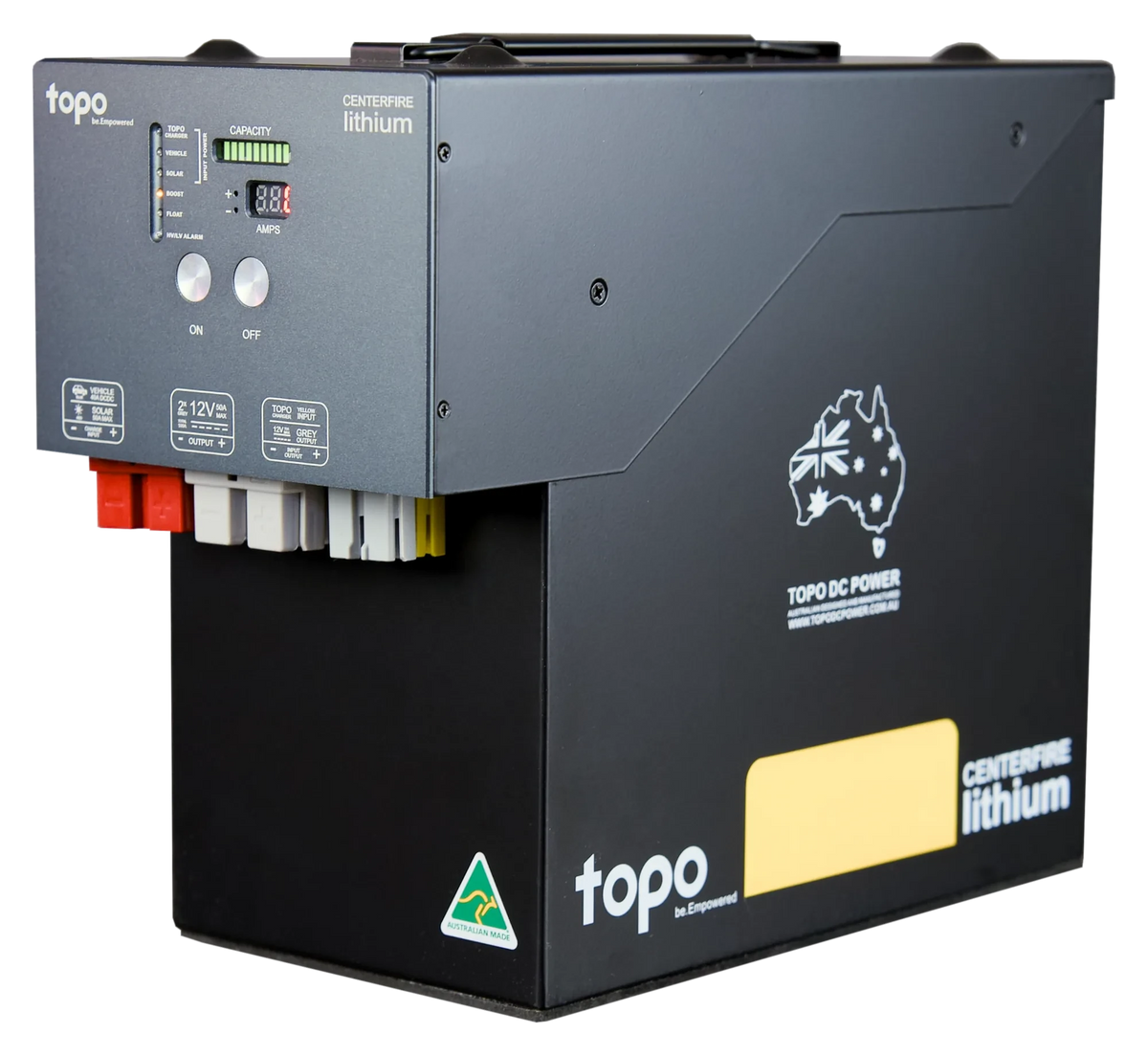
 Centerfire CF100
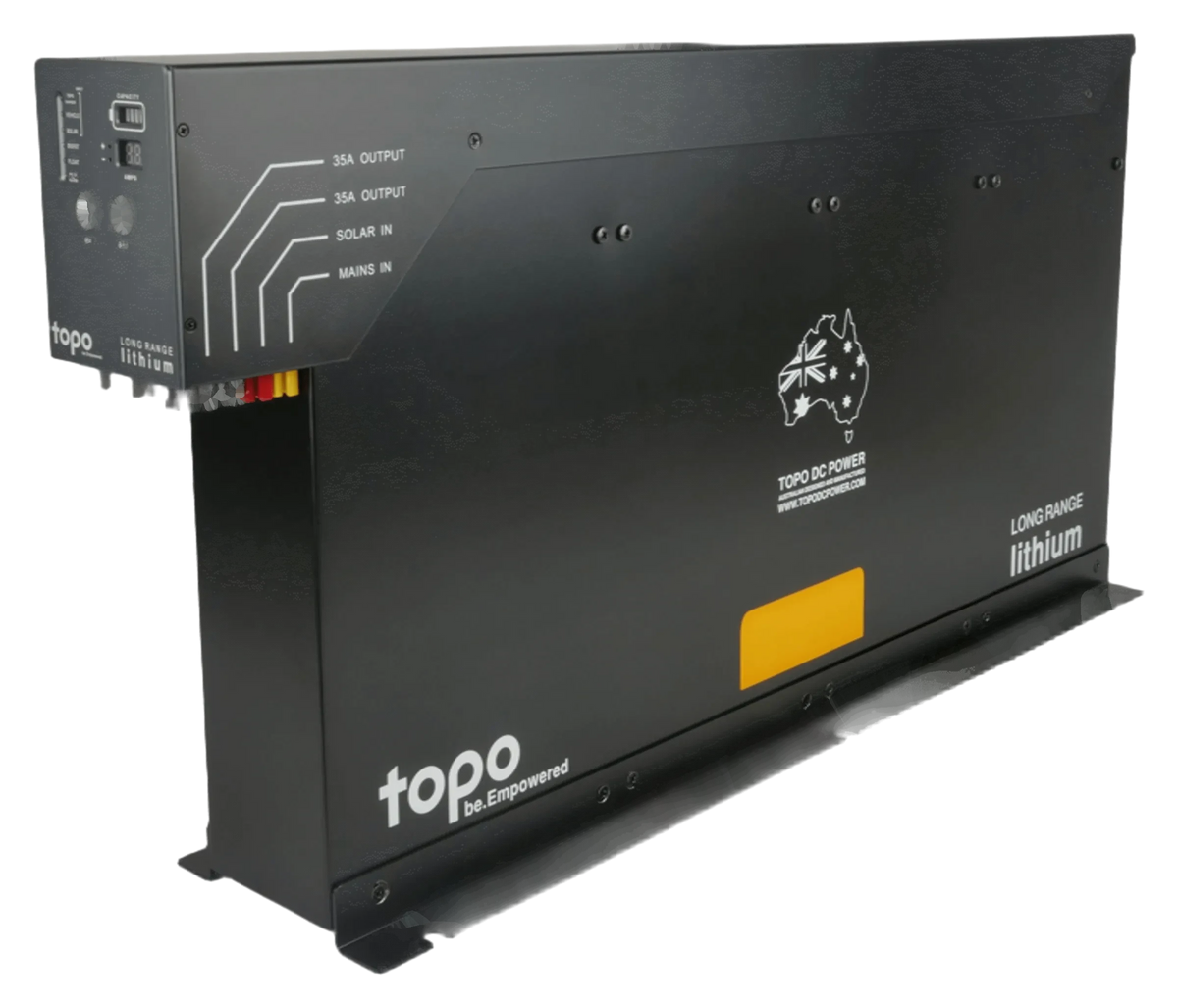 Long Range
 Tinny Mate
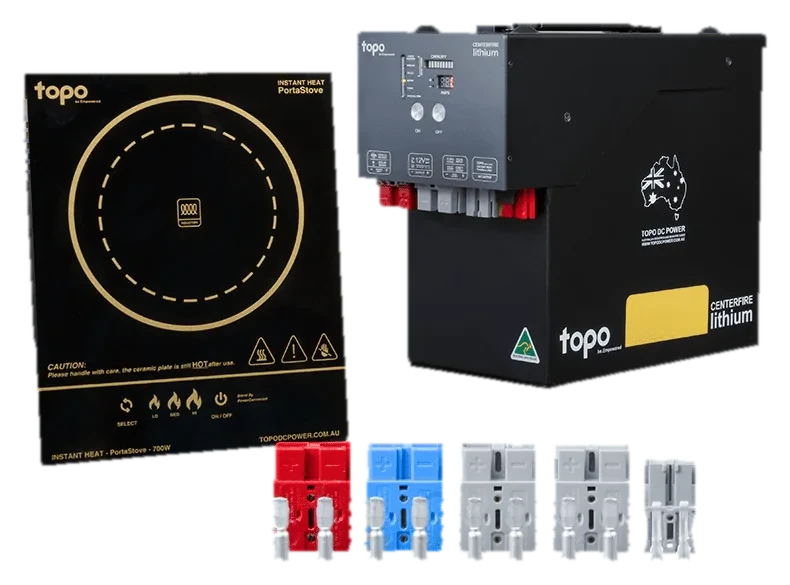 Direct Drive
DIY dual battery: DC-DC charger or isolator for lithium?
For a DIY dual battery setup with a 12V lithium (LiFePO4) second battery, use a DC-DC charger. An isolator only connects the two batteries, so the second one gets whatever the alternator happens to supply. A DC-DC charger controls the charge, whatever the alternator is doing.
Short answer: for a LiFePO4 second battery, a DC-DC charger. An isolator connects the batteries and the second battery takes whatever voltage the alternator gives it. A DC-DC charger takes the alternator's output and turns it into a controlled charge for the battery it's feeding.
What an isolator does
An isolator, or voltage-sensitive relay, is a switch. When the engine runs and the starter battery voltage rises, it closes and joins the two batteries. When the engine stops and the voltage falls, it opens and keeps the second battery from pulling down the first.
That's all it does. While it's closed, the second battery sees the alternator's voltage, minus whatever the cable loses on the way. It doesn't shape the charge to suit the battery.
What a DC-DC charger does
A DC-DC charger draws from the starter battery while the engine runs and delivers a regulated charge to the second battery. It can lift the voltage when the alternator is low or the cable run is long, and it charges in stages suited to the battery chemistry, then holds it at float when it's full.
It also decides when to charge. The 40A DC-DC charger built into the Centerfire CF100 switches on when the starter battery is above 12.8V and off when it falls below, which keeps the starter battery out of it.
Why it matters for lithium
A LiFePO4 battery charges best with a controlled voltage. On the CF100 the unit regulates the battery at 14.2V when it reaches float, with protection that cuts in above 14.5V.
Two things make an isolator a poor match for that:
- Variable-voltage alternators. Many late-model vehicles run a smart alternator that lowers its output once the starter battery is charged. Through an isolator, the second battery gets that lower voltage and may never reach full.
- Long cable runs. A battery in a canopy or a rear cargo area is a long way from the alternator. Voltage drops along the cable, and an isolator can't make it up.
A DC-DC charger handles both, because it regulates the output no matter what arrives at its input.
What to check on your vehicle
- The alternator. If the vehicle has a smart or variable-voltage alternator, an isolator is the wrong tool. The owner's manual or the dealer can confirm which you have.
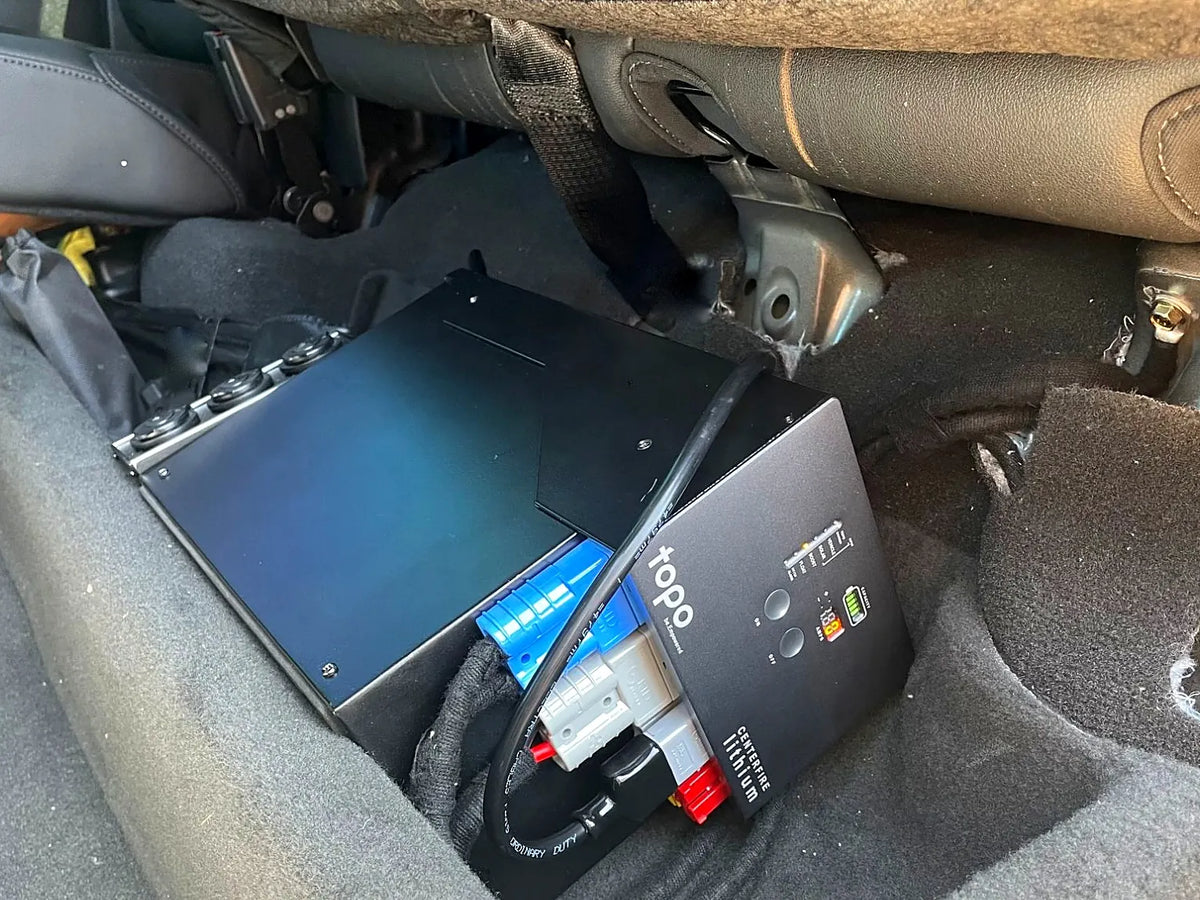
- Where the second battery sits. The further from the engine bay, the longer the cable and the bigger the voltage drop. A canopy is a long run. Under the rear seat is a shorter one.
- What the charger draws. The CF100's 40A charger draws up to 55A at its input. Size the cable and the fuse for that figure.
Side by side
| Isolator | DC-DC charger | |
|---|---|---|
| What it is | A switch between the batteries | A charger powered by the vehicle |
| Charge voltage | Whatever the alternator supplies | Regulated to suit the battery |
| Smart alternators | Can leave the second battery short | Boosts the output |
| Long cable runs | Loses voltage along the run | Makes up for the loss |
| Starter battery protection | Opens when the voltage falls | Stops charging below its cut-in voltage |
Built in, not bolted on
A DC-DC charger is usually one more part to mount, wire and fuse. On the Centerfire CF100 it's inside the unit, alongside the solar controller and the dual battery controller. The vehicle side is a fused cable to one blue plug, and the charger moves with the unit if it goes into another vehicle.
The CF100's vehicle input draws up to 55A from the starter battery while charging, so the alternator and the cable need to supply that. If you're unsure about your vehicle's alternator, ask us before you fit it.
Solar and mains in the same unit
A separate DC-DC charger usually comes with a separate solar regulator. In the CF100 the solar controller is built in too: a 12V panel with an open-circuit voltage of 15 to 25V plugs into the red input, and the Topo 10A Mains Charger plugs into the yellow one. Solar and mains share a 25A combined maximum. Vehicle charging through the DC-DC charger is separate, and all three can charge at once.
To fit one, see how to fit a 12V dual battery system yourself. For the same setup in a ute, see the Toyota HiLux 12V dual battery setup. The full unit is on the Centerfire CF100 page.
Questions
Can I charge a lithium second battery through an isolator?
It will take some charge, but the battery gets whatever voltage the alternator supplies. With a smart alternator or a long cable run, it may never reach full. A DC-DC charger regulates the charge.
Does my vehicle have a smart alternator?
Many late-model vehicles do. Check the owner's manual or ask us with the make, model and year. A DC-DC charger works with both types.
Does the CF100 need a separate DC-DC charger?
No. A 40A DC-DC charger is built into the CF100.
Will a DC-DC charger flatten my starter battery?
Not the one in the CF100. It only charges when the starter battery is above 12.8V and switches off when it falls below.